

School
Resources
School Resources
Whether you're in preschool, elementary school, middle school, high school, or planning for life after graduation, we're here to help. Please explore the resources below.
If you have any questions, please feel free to reach us at info@designergenesnd.com or 701-751-2071 (office).

North Dakota Department of Instruction has a set of guidelines for the IEP process: https://www.nd.gov/dpi/sites/www/files/documents/SpeEd/Guidelines/IEP%20Guide%208-2019.pdf
What should an IEP consist of?
Each child’s IEP must contain specific information, as listed within the Individuals with Disability Act (IDEA), our nation’s special education law. This includes (but is not limited to):
— the child’s present levels of academic achievement and functional performance
— annual goals for the child
— the special education and related services to be provided to the child
— where the school day is spent
— how (and if) the child is to participate in state and district-wide assessments
— when services and modifications will begin, how often they will be provided, where they will be provided, and how long they will last
— how school personnel will measure the child’s progress toward the annual goals.
For all the details about what the law requires be included in an IEP, dive into the “Center for Parent Information and Resources” IEP Contents page.
A team of professionals and advocates for the child will gather to write their IEP on an annual basis.
These individuals include:
Parent (s)
Teachers (at least one regular education teacher and the child’s special education teacher)
A person who can interpret evaluation results of the child
A school system representative
Transition Services Agency Representative(s) (especially after age 16)
Others with knowledge or special expertise about the child
This can include audiology services, counseling services, physical therapy, speech-language pathology, etc.
The student (when appropriate, like when transition planning is being discussed at age 16 &17)
Who Should be in the IEP Meeting?
How often should the IEP be reviewed?
The team of people must gather to review the IEP at least once a year to ensure the IEP is meeting the needs of the student and the student is meeting their annual goals. The case manger arranges and convenes the IEP meetings, organizes and distributes the documents, and maintains communication with all representatives in the meeting.
When an IEP meeting is approaching, the case manager will inform the team using the “Notice of Meeting” form.
The team can convene more often if the IEP needs to be revised, whether that is to updated the child’s goals OR to add new goals if the previous ones have been met.
Information above credited to:
Center for Parent Information and Resources. (2025, December 3). Contents of the IEP. https://www.parentcenterhub.org/iepcontents/
ND Department of Instruction. (2017, July). Guidelines: Individualized Education Program Planning Process. NDDPI. https://www.nd.gov/dpi/sites/www/files/documents/SpeEd/Guidelines/IEP%20Guide%208-2019.pdf
Click on the links for more information
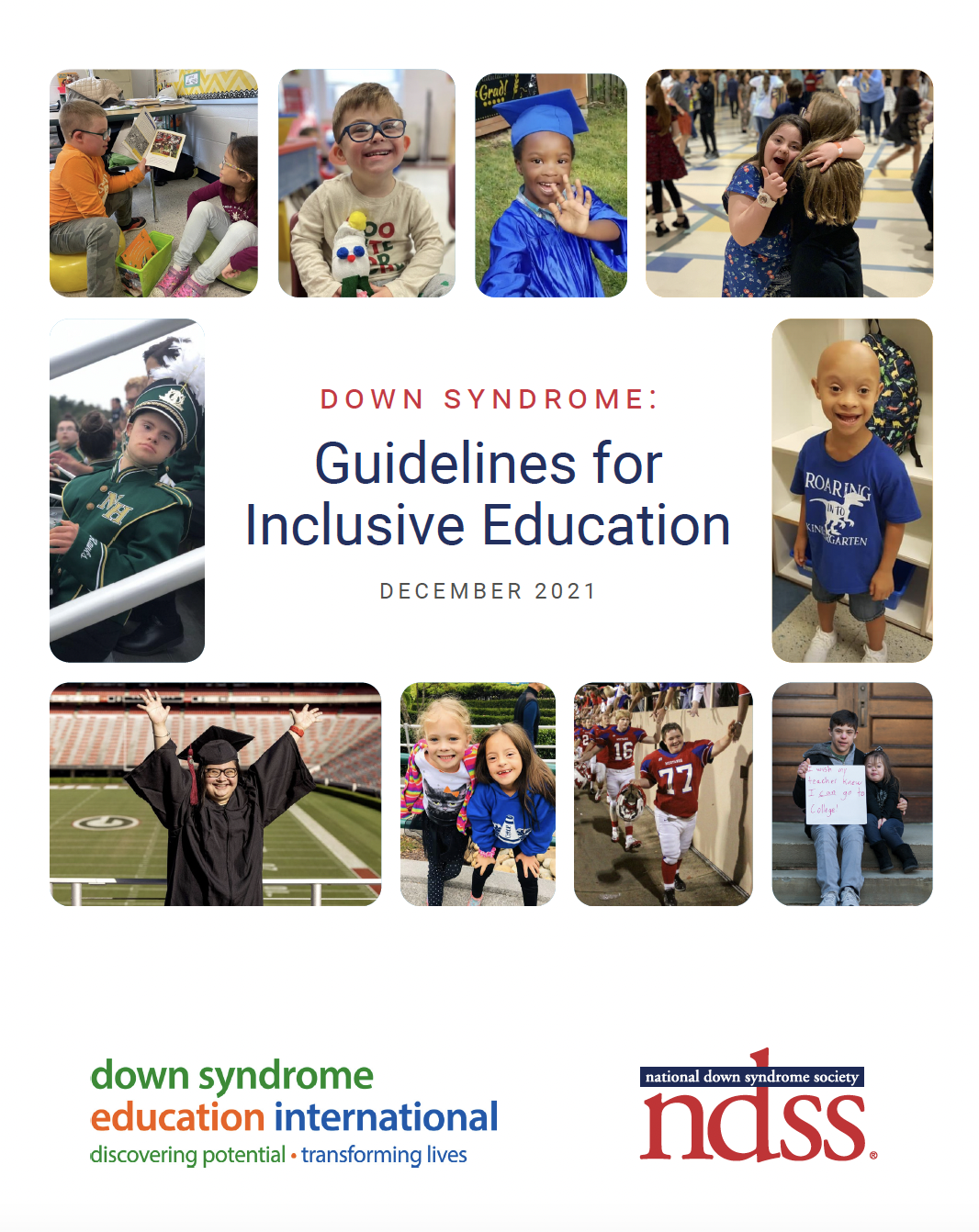
Guidelines for Inclusive Education
National Down Syndrome Society has put together a Down Syndrome: Guidelines for Inclusive Education Handbook. This is a resource for both families and education teams.
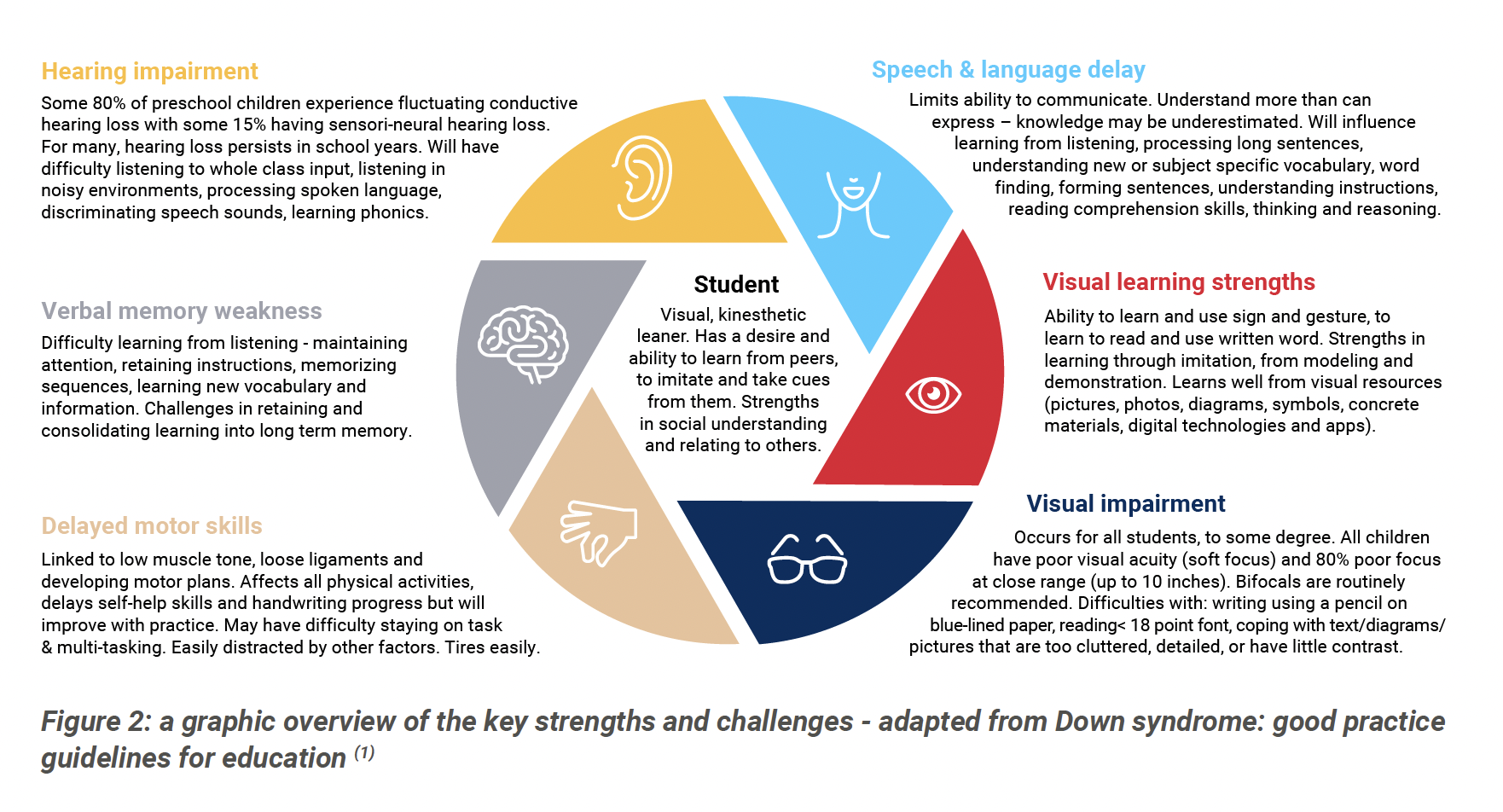
Learning Profile
Children with Down syndrome have a specific developmental profile of strengths and challenges. This graphic summarizes the strengths and challenges associated with the main aspects of the specific learning profile as well as the unique range of sensory, physical, and cognitive needs of this group of learners.
Find this printable along with additional resources by clicking HERE or the picture below.
North Dakota Education Information
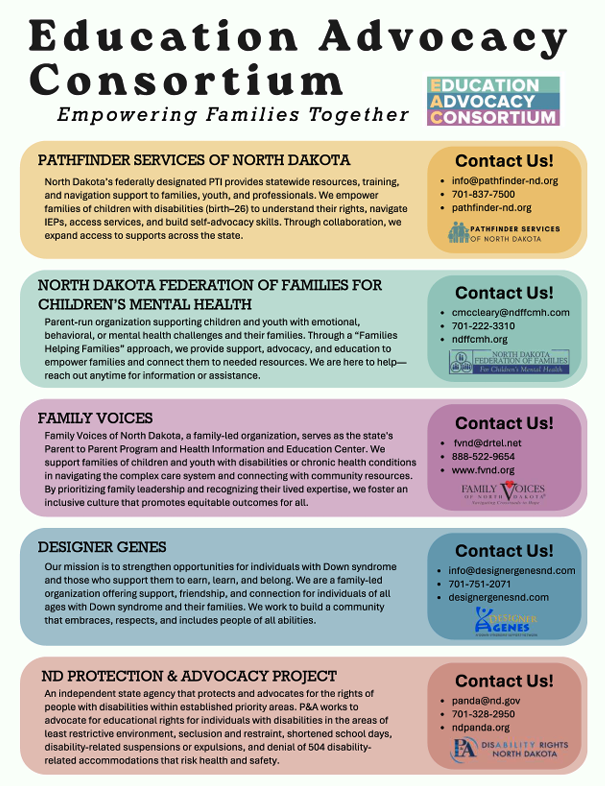
North Dakota Protection & Advocacy
Students with disabilities have the right to a free appropriate public education. P&A works to advocate for educational rights for individuals with disabilities in the areas of least restrictive environment, seclusion and restraint, shortened school days, disability-related suspensions or expulsions, and denial of 504 disability-related accommodations that risk health and safety.
Click the link below to learn more about Protection & Advocacy education resources.
Pathfinder Services of ND is the Parent Training and Information Center (PTI) for the state of North Dakota.
Every state has at least one Parent Center, designated and funded by the U.S. Department of Education, Office of Special Education Programs (OSEP).
The Parent Information Centers program is one of the primary vehicles under the Individuals with Disabilities Education Act (IDEA) for providing information and training to parents of children with disabilities.
Advocacy Opportunities
There are many opportunities to get involved and advocate in North Dakota. For more information about how to get involved in education related issues in our state, please reach out to our Designer Genes office.
We would enjoy the opportunity to meet with you and share about different opportunities in North Dakota.
The K‑12 Education Coordination Council is seeking a new member!
This council brings together leaders from across North Dakota to strengthen collaboration, streamline education services, and support statewide initiatives that improve outcomes for all students. Members help review programs, identify opportunities for coordination, and provide recommendations that shape the future of K‑12 education in our state.
Districts are encouraged to submit applications before August 31.
Learn more about the Council and apply here: https://apps.nd.gov/gov/boards/Application/PersonalInfo